
When a student doesn't know what to study: a one-week exploration plan
A practical guide for international-school counselors: turn a one-to-one meeting with an undecided student into a focused exploration task and follow-up.
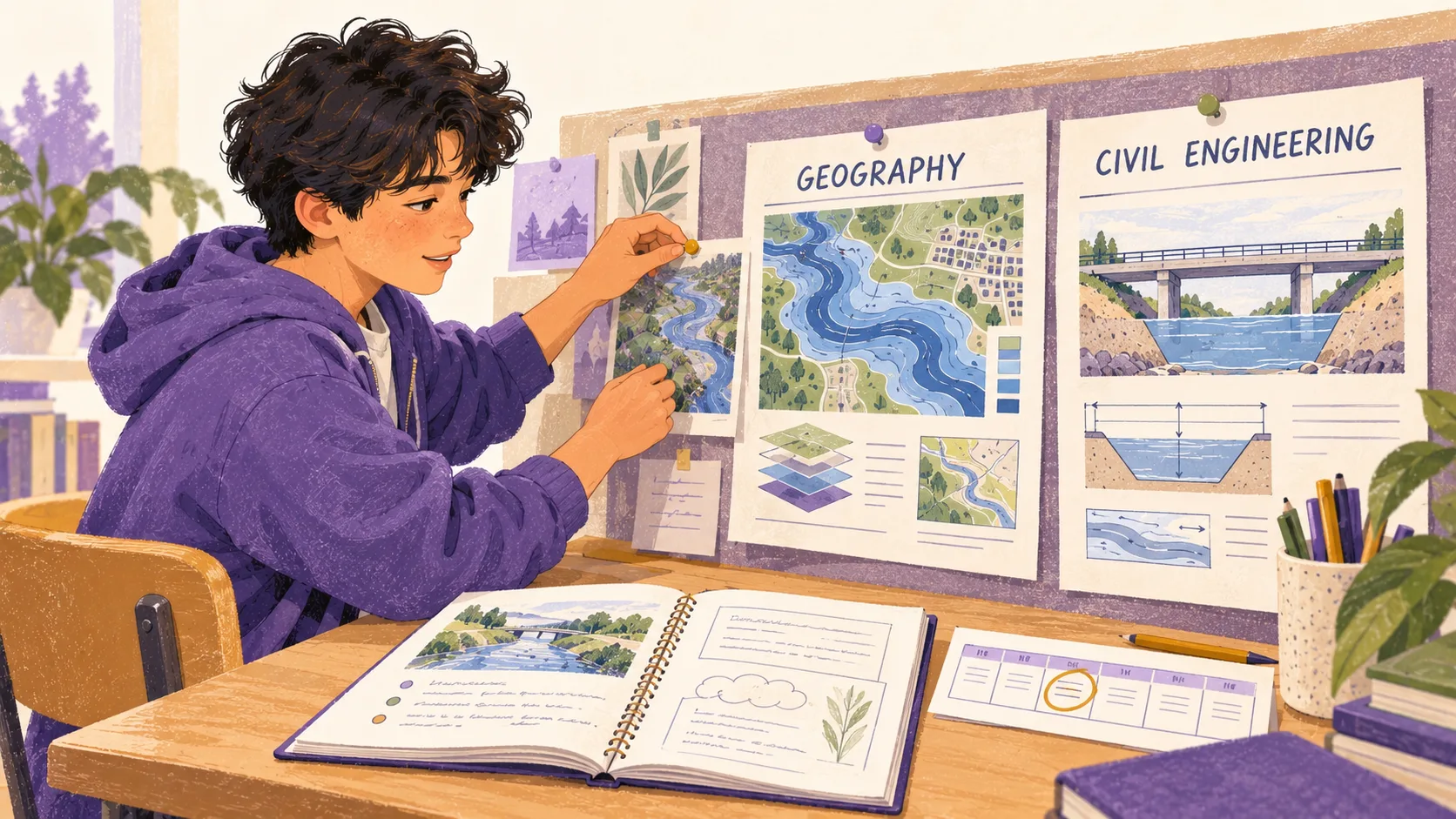
You're in a one-to-one guidance meeting, and a student says, “I still don't know what to study.” You don't need to solve their whole future in that conversation. Start by finding out which part is unclear, then agree one question they can investigate before you meet again. For international-school counselors, this plan turns that next step into a manageable week of exploration, using actual course content and a short reflection sheet.
Find out what “I don't know” means
You may have already discussed interests, shared course websites and suggested an open day. Yet the student returns with the same answer. Before adding another task, try asking:
“Which part feels hardest to work out?”
Give them time. If they need a starting point, offer a few possibilities: finding something interesting, choosing between several interests, understanding a course, or working out whether an option is possible. Leave room for an answer you have not anticipated.
| What the student says | A useful next investigation |
|---|---|
| “Nothing really interests me.” | Look at one recent activity they wanted to continue and what held their attention. |
| “I like too many things.” | Compare how two courses approach an interest they share. |
| “I like it, but I don't know what studying it means.” | Read a first-year module description and try a relevant introductory resource. |
| “I know what I'd like, but I don't think I can go.” | Identify the actual cost, qualification or family question that needs an answer. |
That last response matters. More reflection will not answer a fee question. Help the student find the right information or person before asking them to reconsider their interests.
If you need an opening for the meeting itself, our Counselor's Desk article on student clarity offers a separate starting point. This plan is for the work between conversations.
Begin with an experience the student can describe
Ask for a moment from a lesson, project, responsibility or interest outside school. It can be ordinary. “Tell me about something you wanted to keep working on” is easier to answer than “What are you passionate about?”
Follow the detail: what were they doing, which part interested them, and what would they happily do again? Enjoying a biology lesson could mean enjoying the experiment, explaining the results or discussing its ethical implications. Each gives you a different question to explore.
Then ask about an activity they found draining. What made it hard to stay engaged: the subject, the kind of work, the group situation or the timing? Comparing the two experiences helps you avoid treating enjoyment of one lesson as a complete picture of their interests.
For a hypothetical example, imagine a student who enjoyed a geography project about flooding. They initially say they liked “helping people.” Asked about the work, they explain that they enjoyed comparing maps and arguing where protection was most needed.
You now have a starting question: “Would you like studying problems where you use evidence to compare possible solutions?” Ask whether that captures their interest. Their correction may be more useful than your first interpretation.
Turn that interest into a course question
Choose one or two course directions to investigate. In the flooding example, the student might explore geography and civil engineering. Ask them to compare the work involved, rather than decide which degree title sounds better.
Open the institutions' own course pages. Ask the student to find a module that interests them, an example of the work involved, and anything that makes them hesitate. UCAS's course-choice guidance similarly encourages students to examine course descriptions and follow through to university information.
For a concrete comparison, Southampton's published Geography BSc includes Geographical Information Systems, while its Civil Engineering BEng includes Hydraulics and Mathematics for Engineering and the Environment Part II. These course examples were checked on 20 October 2026; confirm the module offering for the student's intended entry year.
Our hypothetical student could note: “GIS connects with the map work I enjoyed. Hydraulics interests me because it applies fluid mechanics to water systems. I want to see a sample problem before deciding how I feel about that work.” They can ask a teacher to help them find an appropriate example. That gives the next activity a purpose beyond browsing another university website.
Keep the comparison close to the student's question:
| Course detail | What the student needs to explain |
|---|---|
| A module or project that interests them | “What would I actually be doing, and why does that appeal?” |
| A teaching or assessment method | “Have I enjoyed working this way before?” |
| A required element they hesitate about | “Would I be willing to do this as part of the course?” |
| Something the page leaves unclear | “Who or what could help me check it?” |
Check whether an appealing element is required, optional or only available under certain conditions. Then ask: “How much does that matter when you compare these options?” A course can sound interesting without being the stronger fit.
Agree a small plan for the coming week
Use the week as a review window, rather than assigning a new task every day. Choose the amount of work with the student, around their actual timetable.
- Before leaving: agree the question and find a credible starting resource together.
- Between meetings: investigate one or two courses and try one accessible activity related to the question.
- At the follow-up: discuss what changed, what remains unclear and the next useful action.
The activity might be part of a sample lecture, an introductory reading or a conversation with a subject teacher. Choose something available without payment or a family professional network. Check any arrangements against the school's usual processes.
Before starting, ask the student what they expect. Afterwards, ask what caught their attention and what they would like to understand better. If they dislike the activity, explore why. Finding a presenter difficult to follow tells you something different from disliking the central problem being discussed.
Give them a reflection sheet they can actually use
Copy this into your usual student notes or share it as a short worksheet. A spoken response can work too. There is no need for a polished presentation.
My question for this week:
An experience that made me curious:
An activity I found draining, and what made it so:
Course or resource I explored, with its link:
One specific thing I would like to study or try:
Why that matters to me:
Something that made me hesitate:
What I now understand better:
One question I still need help with:
When and how we will check back:
The flooding-project student's sheet can now name the course detail they want to explore and the sample activity they will try. The follow-up has a clear starting point.
Use the follow-up to choose the next step
Start with “What did you learn that you couldn't have told me last time?” Let the student refer to their notes rather than repeat the entire search.
If they found a promising direction, ask which detail made it promising and what still needs checking. If they ruled something out, explore what they learned about their preferences. If nothing happened, find out where the task became difficult before assigning more work.
For counselors who also teach or coordinate the DP, keep the follow-up manageable: ask students to bring their main finding and unresolved question through your existing process. Decide who needs a fuller conversation from what they bring. The worksheet should help you understand their thinking, not create another elaborate tracking system.
Keep consequential questions separate. Current course requirements, affordability and application deadlines still need their own official checks. You can make progress on an interest while acknowledging a practical question remains open.
Where Lyra can support the preparation
Lyra uses structured, conversational reflection to help students articulate interests, values and uncertainty, then organizes that context into a student report for counselor discussion. You can use that preparation to begin with something the student has already expressed and ask them to explain it further.
For our flooding-project example, suppose the student describes enjoying map comparisons during their reflection and that interest appears in their report. In the meeting, you could ask: “What was it about that part of the project you enjoyed?” Check their explanation, connect it with the GIS and hydraulics course content, and agree which sample activity to try.
The report supplies a starting point; the student adds or corrects the meaning, and together you choose an investigation. At the follow-up, compare what they learned with what first interested them. This is a suggested way to use Lyra's reflection and report, not an automatic course decision.
For the wider rationale, read why self-knowledge matters in guidance. If you are considering that preparation step for your school, request a counselor demo.
The immediate aim is modest: the student leaves knowing what to investigate, and returns able to explain something they learned.
Common questions from counselors
What if the student wants me to choose a degree for them?
Offer a small set of directions with your reasons, then ask which question they would like to investigate first. Make your suggestions open to correction. The student should be able to explain what they learned, rather than simply accept the option an adult preferred.
Can this work with a group?
You can introduce the worksheet together and let students choose their own questions and resources. Keep personal circumstances out of compulsory group sharing, and offer individual follow-up for questions about finances, family expectations or eligibility.
What if the student changes their mind again?
Ask what new information prompted the change. Compare that with their earlier notes. A revised direction can reflect learning; repeated changes without new information may suggest the investigation question needs to become more specific.
What if an application deadline is close?
Confirm the actual deadline and available options through the relevant official sources. Agree the decision that must be made now and the information needed for it. A general exploration week should not delay a time-sensitive application step.