When students do not finish reflection: find the barrier first
Use a neutral check-in for larger groups, then follow up on individual barriers to reflection. Includes three adaptable messages and a minimal follow-up record.

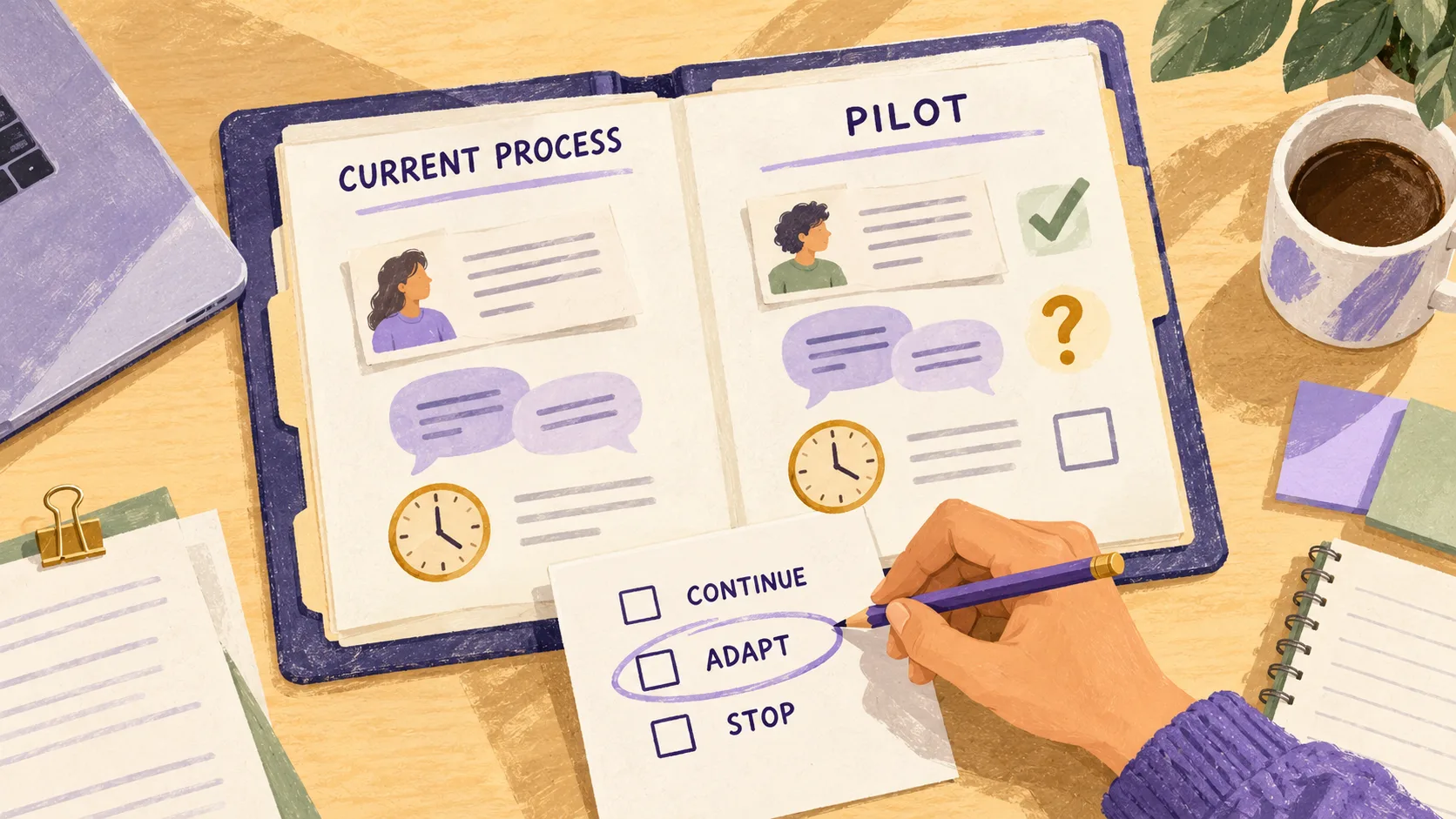
The reflection task is still unfinished, and the next reminder is ready to send. A reminder only helps when remembering is the problem. With a large group, start with a brief neutral check-in that makes help easy to request; individual follow-up can then address access, unclear instructions, time or another unresolved barrier.
A quick route: neutral group check → individual follow-up where needed → one workable next step. A completion label tells you where to ask, not what is wrong.
Use the neutral group check-in first; the three individual response templates cover access, an unclear task and time only after the relevant barrier is known.
Start with a neutral check-in when the group is large
You do not need a separate diagnostic conversation with every student before sending the first message. Through a school-authorized channel, you could send:
Email subject: Preparation for [meeting]: help if you need it
“A quick check on the preparation for [meeting or lesson]: if you need help with access, what to write or finding time, let us know privately through [approved support route]. One experience and one question are enough to begin our conversation.”
Use an agreed response window and a support route someone can cover. Address a shared problem once for the group, then follow up individually with students who ask for help, remain stuck or approach an appointment without a starting point. If there is no reply, use the next scheduled tutor/counselor contact to offer a private check-in; keep the appointment and the one-experience fallback. Silence is not a diagnosis, and a separate conversation with every student is not required before the first neutral message.
Ask about the stopping point
Begin with: “Which part became difficult to continue?” Give the student room to explain before offering categories. If necessary, ask whether they could access the task, understood it, found an example or knew what would happen to their response.
Do not infer motivation from an empty field or a status label. A student may have tried repeatedly to open the activity, thought they needed an impressive answer, or decided not to write something personal into a shared space.
If the student has not started, ask what they understood the task was for. “Prepare one question for our meeting” can be a clearer purpose than “complete your reflection,” especially when the student is unsure what reflection is supposed to produce.
Match the response to the barrier
| What you discover | A useful response |
|---|---|
| The student cannot access it | Use the approved support route and give an appropriate way to prepare meanwhile |
| The prompt seems vague | Model one ordinary experience and ask the student to explain the task back |
| They think a good answer must sound impressive | Show how a small, specific example can be useful |
| They are unsure who will read it | Explain the actual sharing process and an appropriate private route |
| The task has no clear next use | Connect it to the next conversation or revise the task |
| There is no workable time before the meeting | Agree a smaller preparation step and keep the appointment useful |
| It was forgotten | Agree a specific, proportionate reminder and next step |
These are possibilities to investigate, not labels to assign from the dashboard. Let the student's account change the explanation.
Make the next attempt smaller without losing its purpose
Suppose a student thinks they must write a career plan before a meeting. Asked to describe one recent lesson they wanted to continue, they can explain an investigation they found absorbing. The difficulty was the implied scale of the answer, not an absence of interests.
In this hypothetical example, a smaller next step is to record the activity and bring one question. They can bring that experience as a starting point and choose a manageable next question together.
Reducing the task does not mean asking for less thoughtful work. It means making the intended work clearer. A specific observation can support a better conversation than a long response written to satisfy a completion requirement.
A follow-up conversation card
What was the preparation meant to help us discuss?
Where did the student stop?
What needs fixing: access / understanding / relevance / sharing concern / timing / another issue
One practical change we will make:
The smallest useful next action:
Who will help and when:
What we will discuss even if the preparation remains unfinished:
Record only what a colleague needs to take the next action, such as “access check requested; counselor will confirm the route before the meeting.” The student's private explanation does not belong in a general completion tracker. If it needs pastoral attention, use the school's established confidential record and support process.
Use the last line deliberately. A student should know that the counselor meeting remains a place to begin, rather than a reward for producing a polished worksheet.
If a written response is a barrier, consider an appropriate spoken account, sketch or short note through the school's usual arrangements. Choose the format with the student. Do not prescribe a particular technology as the solution before understanding the difficulty.
Three follow-ups you can adapt and send
Use these individual messages after clarifying the relevant barrier, through the school-authorized channel. The subject lines are for email; for a portal, use its normal message title instead. Replace the brackets with covered arrangements. These are suggested messages, not accounts of real students.
Access trouble
Email subject: Access help before [meeting]
“Thanks for letting me know the preparation will not open. Please use [approved support route] for help with access; you do not need to send personal answers or a password. For our meeting, bring one activity you would like to discuss. We can start there.”
An unclear task
Email subject: One experience for our guidance conversation
“You do not need a career plan for this. Choose one recent lesson or activity and note the part you wanted to keep doing. Bring one question it raises. If that still feels unclear, we can work through an example at [agreed check-in].”
Not enough time
Email subject: Keep our meeting: a smaller preparation step
“Let's keep the preparation manageable. If the full task will not fit before [meeting], bring one experience and one question instead. Keep the appointment; we can decide together what is worth completing afterwards.”
Send the relevant response, not all three as a sequence. If no reply arrives, keep the agreed in-person fallback rather than adding automated reminders.
Keep a status separate from educational progress
The published pilot checklist distinguishes participation from usefulness. A completed response may still be general. An unfinished task may already contain the question the student most wants to discuss.
If your school uses a product status, confirm what it actually means in the current workflow. An invitation, a started activity, a generated report and a counselor review describe different events. Do not treat one as proof that the next happened.
Ask what the student can now explain and what the counselor can use. That gives a more useful account of preparation than a completion label alone.
Notice a repeated barrier without building another tracker
When several students stop in the same place, examine the introduction, prompt, timing and handoff. Ask a small number of students to explain what they thought they were being asked to do. A repeated misunderstanding may reveal a design problem the team can fix.
The EEF implementation guidance emphasizes school context and how an approach works in everyday practice. That is a useful perspective for reviewing the process; it does not validate this follow-up card or establish a product's impact.
An anonymous pattern such as “the opening prompt needed a concrete example” may be enough to improve the task. Keep this article's follow-up focused on the individual student; cohort ownership and scheduling are a separate school coordination question.
Use the Lyra view to decide whom to ask, not why they stopped
Lyra's school-facing workflow brings student progress and available outputs into the counselor's view. Use the information available in your school's current setup to identify a student whose preparation needs a check-in. Confirm what the displayed stage means before acting; it cannot tell you whether the barrier was time, access or a personal concern.
Ask the student, choose the relevant follow-up above, and keep the appointment open. If a profile is available, use the part the student recognizes; if it is not, begin with their one experience and question. This does not assume counselors can inspect an unfinished conversation or that reminders are delivered automatically. To examine that follow-up workflow for your school, request a counselor demo. The Counselor's Desk article on student clarity offers questions for beginning with little preparation.
Common questions from counselors
Should I send more reminders when completion is low?
First find where students stop. More reminders may help a forgotten task but will not fix access, unclear instructions or a concern about sharing personal information.
What if a student says reflection is pointless?
Ask what they understood it would be used for and whether the task connects to a real next conversation. Explain or revise the purpose instead of assuming resistance to guidance.
Does unfinished work mean the student is unmotivated?
It does not establish the reason. Ask the student and investigate the barrier. Keep a product status or missing response distinct from an interpretation of the person.
Should the meeting wait until the student finishes?
Use professional judgment and the school's arrangements. An exploratory conversation can start with one prompt and can help make later preparation more useful.